Why Learning How to Pose Clients Can Change Your Photography Business
Most clients do not know how to pose, and that is exactly why the photographer’s direction matters. In this post, Terrell A. Pullen breaks down why posing is more than a technical skill, it is part of the client experience, the final image, and the confidence people feel in front of the camera.
Most new photographers spend the beginning of their journey focused on the camera.
That makes sense.
You learn aperture, shutter speed, ISO, white balance, lenses, lighting, editing, file delivery, and all the technical things that make photography feel complicated at first. You study your camera until you finally understand how to get a sharp, properly exposed image. You learn how to shoot in manual mode. You learn how to use flash. You learn how to clean up a photo in editing.
All of that matters.
But at some point, you realize something important: a technically correct photo is not always a good photo.
A photo can be sharp and still feel awkward.
A photo can be properly lit and still feel stiff.
A photo can have great color and still make the client look uncomfortable.
That is where posing comes in.
Posing is one of the biggest differences between simply taking pictures and actually creating images people want to use, post, print, and pay for. When a client books a photographer, they are not only paying for someone to press the shutter. They are paying for direction. They are paying for confidence. They are paying for someone who can help them look good when they do not know what to do with their body, hands, face, posture, or expression.
That part gets overlooked way too often.
Most Clients Do Not Know How To Pose
This is the truth: most people do not know what to do in front of a camera.
That does not mean they are bad clients. That does not mean they are not photogenic. It simply means they are normal people.
Most people are not trained models. Even when someone calls themselves a model, they may still be new, inexperienced, or used to copying poses they have seen online without understanding why those poses work. They may know how to stand in front of a mirror, but that does not always translate to camera-ready posing.
Then you have everyday clients: business owners, professionals, couples, graduates, creatives, parents, actors, artists, and people who just want strong images of themselves. Many of them have never had to pose for a professional session before. Some are nervous. Some feel awkward. Some are already worried they are going to look bad before the session even starts.
That is why the photographer has to lead.
If the client has to figure everything out alone, the session becomes stressful. They start asking themselves too many questions.
Where do I put my hands?
Should I smile?
Do I look stiff?
Is my face doing something weird?
Do I stand straight?
Do I turn?
What do I do with my shoulders?
Once those thoughts take over, it shows in the photo.
A good photographer sees that and steps in with clear direction.
Posing Is Not About Making People Look Fake
Some people hear the word “posing” and think it means forcing the client into stiff, unnatural positions.
That is not the goal.
Good posing should not make someone look fake. Good posing should make someone look more confident, more polished, and more intentional. It should bring structure to the image without removing personality from the person.
The best posing direction usually feels simple.
Turn your shoulders slightly.
Bring your chin forward a little.
Relax your hands.
Shift your weight to one leg.
Drop that front shoulder.
Look past the camera.
Take a breath.
Now give me a softer expression.
Small changes can completely change the final image.
That is why posing is not just about memorizing poses. It is about understanding the body, reading the person in front of you, and knowing how to make adjustments in real time.
A pose that works for one person may not work for another. A pose that looks good in a fashion shoot may not make sense for a corporate headshot. A pose that works for a confident model may make a first-time client feel uncomfortable. The photographer has to know the difference.
The Camera Captures Confidence, But It Also Captures Confusion
The camera is honest.
If a client feels lost, the camera usually shows it. If they feel unsure, the camera usually shows it. If their hands are tense, shoulders are raised, chin is pulled back, or smile is forced, the final image will carry that energy.
That is why direction matters.
When a photographer knows how to pose, the client does not have to carry the whole session. They can relax because they trust that someone is paying attention. They know the photographer is watching the details. That confidence changes the session.
The client starts to loosen up.
The expressions become more natural.
The body language becomes stronger.
The photos start to feel intentional instead of accidental.
That is when the session gets better.
A lot of photographers think the client needs to “just relax,” but the truth is, clients relax when they feel guided. Telling someone to relax is not direction. Showing them what to do is direction.
Posing Starts Before The First Photo
Posing does not begin when the camera comes up.
It starts with how you communicate before the session. It starts with setting expectations. It starts with explaining that you will guide them through the process. A lot of clients are nervous because they think they are supposed to show up already knowing what to do.
They are not.
That is part of the photographer’s job.
Before a session, I want clients to know they do not have to be professional models to get professional-looking images. They do not have to walk in with a full pose book memorized. They just need to be willing to take direction.
That one conversation can take pressure off the client before they ever step in front of the camera.
When people know they will be guided, they show up differently. They are less defensive. They are less embarrassed. They are more open to trying things because they do not feel abandoned in front of the lens.
That matters.
Hands Are Usually The First Problem
If you want to see a client get uncomfortable fast, watch what happens when they do not know what to do with their hands.
Hands can ruin an otherwise good photo.
Tense hands look nervous.
Hidden hands can look awkward.
Flat hands can look lifeless.
Clenched hands can make the whole body feel stiff.
A lot of new photographers focus so much on the face that they forget the hands are part of the story too.
The hands need purpose.
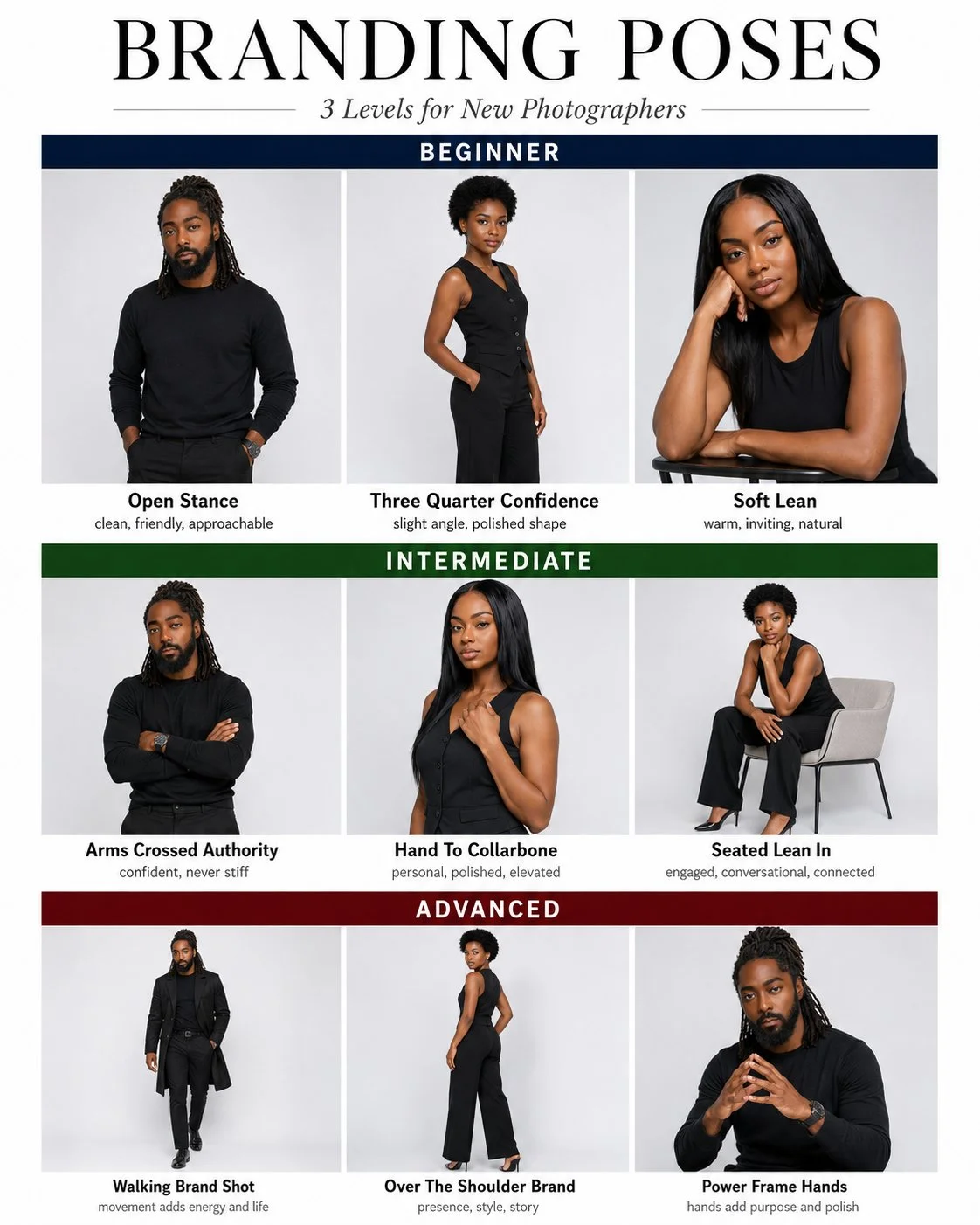
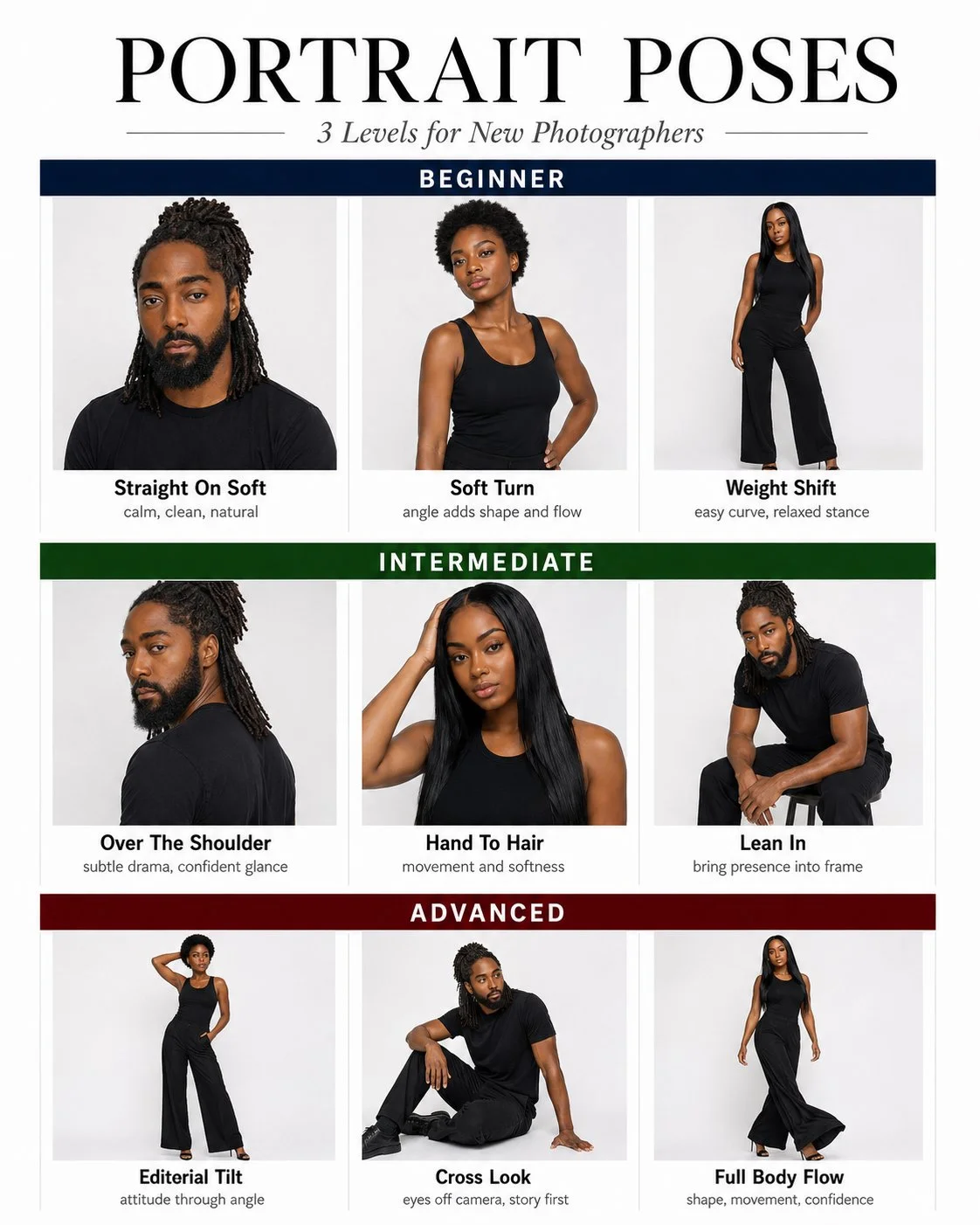
That does not mean they always have to do something dramatic. Sometimes the best direction is simple. Hands in pockets. One hand lightly touching the jacket. Fingers relaxed near the face. Hands resting naturally on the thigh. Arms folded with intention. One hand adjusting a sleeve. Light contact with a chair, wall, or prop.
The key is making it look natural, not random.
When the hands are placed well, the whole image feels calmer. The client looks more confident because their body has something to do.
Posture Can Make Or Break A Portrait
Posture is one of the fastest ways to improve a photo.
Most people naturally slouch a little. That may not matter in everyday life, but in a portrait, it can change everything. Slouched posture can make someone look tired, unsure, or less confident. Strong posture makes the image feel cleaner and more powerful.
But here is the mistake: telling every client to “stand up straight” can make them look stiff.
There is a difference between good posture and military posture.
Good posture still has life in it. The shoulders are relaxed. The spine is lifted. The chest is open without looking forced. The neck has length. The body feels alert, but not rigid.
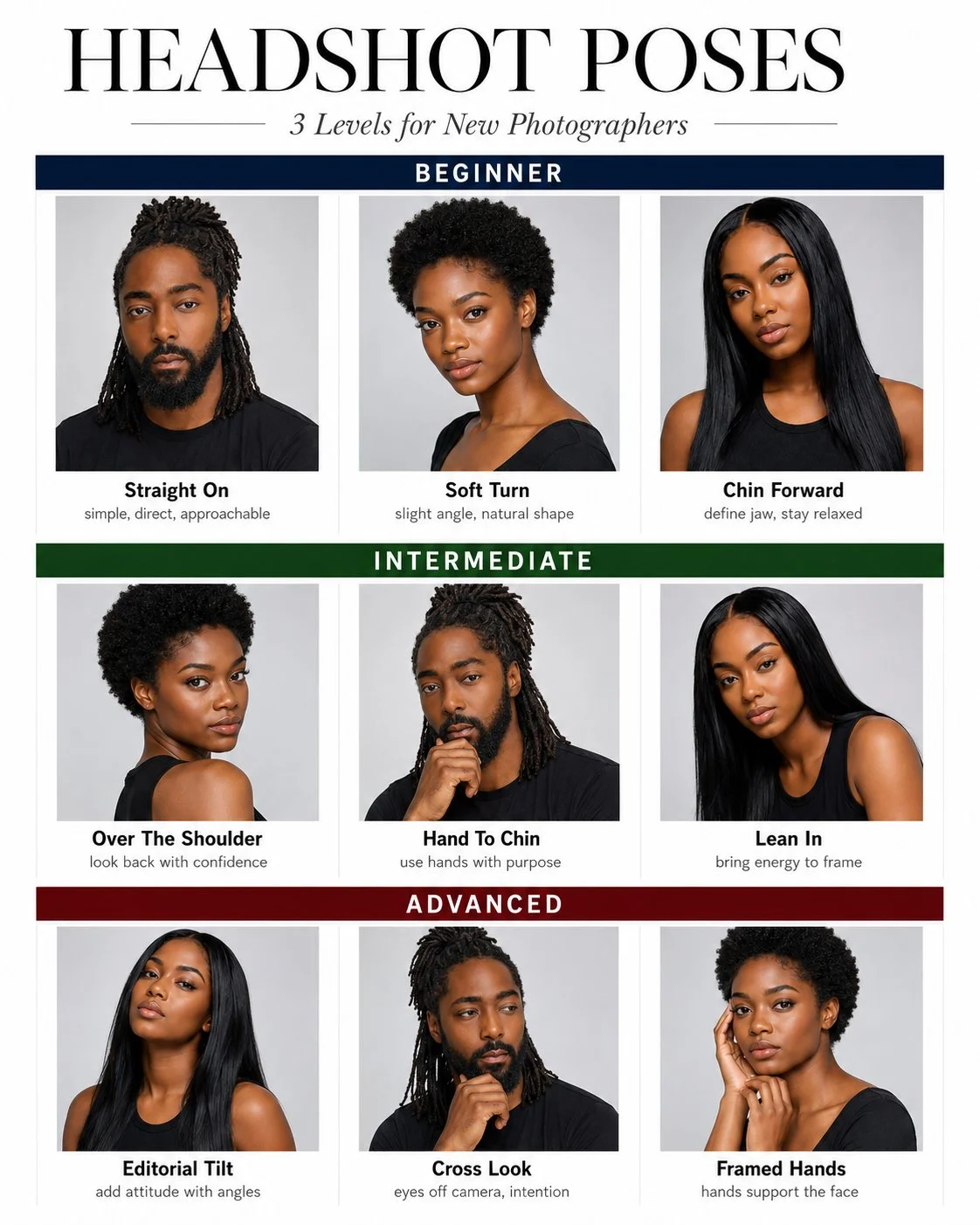
For headshots and branding portraits, posture is especially important. These images often represent a person professionally. They may use them for LinkedIn, websites, business cards, speaking engagements, press features, or marketing material. Their body language needs to say they are serious, capable, and confident.
That does not happen by accident.
The Face Needs Direction Too
A lot of clients do not know what expression to make.
That is normal.
Some people smile too hard because they are nervous. Some barely smile because they do not want to look fake. Some hold tension in their jaw. Some lift their eyebrows too much. Some freeze completely when the camera comes up.
The photographer has to direct the face just like the body.
Sometimes that means asking for a real smile. Sometimes it means asking for a softer look. Sometimes it means having the client laugh for a second, then catching the relaxed moment right after. Sometimes it means telling them to breathe through the expression instead of holding their face tight.
A good portrait is not only about where the person is standing. It is about what their face is communicating.
Are they approachable?
Are they confident?
Are they serious?
Are they relaxed?
Are they powerful?
Are they warm?
The expression should match the purpose of the image.
A corporate headshot does not need the same expression as a fashion-inspired portrait. A branding image for a coach may need warmth and approachability. A creative portrait may need more attitude or edge. A model portfolio may need variety.
The photographer has to know what the image is supposed to say.
Posing Should Match The Client’s Purpose
Every client does not need the same kind of posing.
This is where photographers have to think deeper.
A headshot client may need clean, simple, professional posing. The goal is usually trust, confidence, and approachability. You do not need overly dramatic angles or complicated body language. You need precision.
A branding client may need more lifestyle-based posing. They may need images that show them working, thinking, leading, creating, or interacting with their environment. The poses need to feel useful for marketing.
A creative portrait client may want something more stylish, expressive, or editorial. That gives the photographer more room to play with shape, movement, wardrobe, lighting, and mood.
A model needs variety. They need to show range. They need to show they can take direction, create lines, use their body, and deliver different expressions.
This is why copying random poses from the internet is not enough. The pose has to serve the person and the purpose.
A pose can look good and still be wrong for the session.
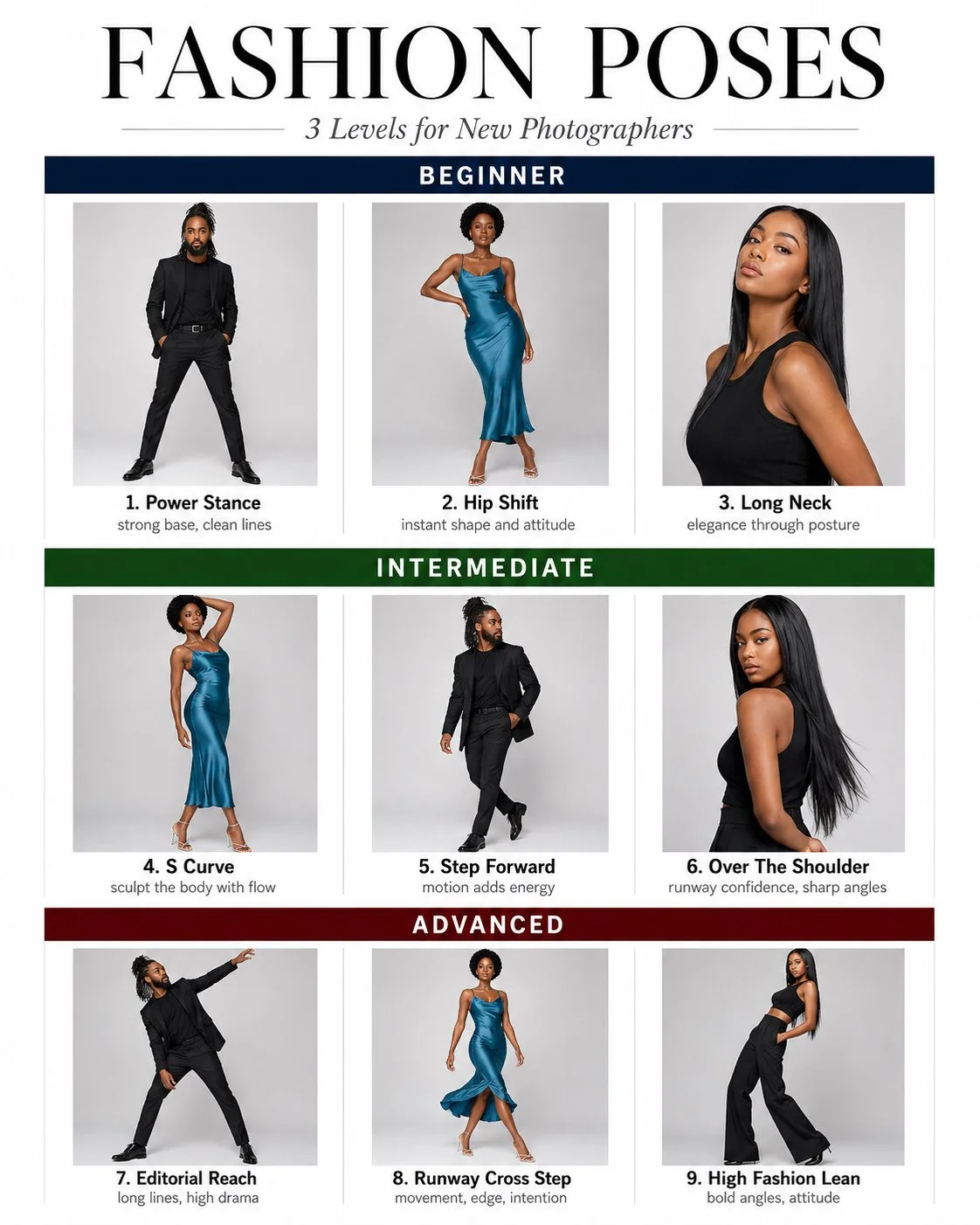
Posing Is A Business Skill
A lot of photographers treat posing like it is optional.
It is not.
If you are charging people for portraits, headshots, branding images, or model portfolio work, posing is part of the service. It is part of the client experience. It is one of the things that separates a professional session from someone just taking pictures with a nice camera.
Clients remember how they felt during the session.
They remember whether they felt guided or lost.
They remember whether the photographer helped them or left them guessing.
They remember whether they felt awkward or confident.
That experience affects reviews, referrals, repeat bookings, and the value people place on your work.
You can have great editing, but if the client felt uncomfortable the entire session, that matters. You can have expensive gear, but if the person in the photo looks stiff and unsure, the image will not hit the way it should.
Gear does not pose the client.
Editing does not fix bad direction.
A good camera does not create confidence by itself.
The photographer has to bring that.
Direction Builds Trust
One of the most important parts of posing is trust.
Clients need to believe that you see what they cannot see. They need to trust that when you ask them to turn, shift, move, or adjust, there is a reason for it.
That trust is built through clear communication.
Do not just bark commands. Explain enough so the client feels included.
Instead of only saying, “Turn your body,” you can say, “Turn your shoulders slightly this way so we can create a stronger angle.”
Instead of saying, “Fix your hands,” you can say, “Relax your fingers a little so your hands do not look tense.”
Instead of saying, “Chin down,” you can say, “Bring your chin down just a touch so the eyes connect better with the camera.”
Those small explanations help clients understand that you are not guessing. You are directing with intention.
That makes them more willing to follow your lead.
New Photographers Need To Practice Posing On Purpose
You cannot wait until a paid session to figure out how to pose people.
That is a mistake.
New photographers need to practice posing the same way they practice camera settings and lighting. You have to study it. You have to test it. You have to learn what works on different body types, heights, face shapes, outfits, and personalities.
Practice with friends. Practice with models. Practice with yourself in a mirror. Watch how small changes affect the image. Study hands, shoulders, chin position, weight shifts, angles, and expression.
Do not just save pose references. Study why they work.
Ask yourself:
What is the body doing?
Where is the weight?
What are the hands doing?
What is the face saying?
What does the pose communicate?
Would this work for a headshot, branding session, creative portrait, or model portfolio?
That is how you get better.
The goal is not to memorize 100 poses. The goal is to understand posing well enough that you can adjust in real time.
The Best Posing Looks Effortless, But It Is Not Accidental
When posing is done well, most people do not notice the technique.
They just see a strong photo.
They see confidence.
They see style.
They see personality.
They see polish.
But behind that image, there is usually a lot of small direction happening.
The shoulder was adjusted.
The chin was corrected.
The hand was relaxed.
The weight was shifted.
The expression was refined.
The angle was chosen.
Those little things add up.
That is the part new photographers need to respect. Strong portraits are not always built from big dramatic changes. Sometimes they are built from small corrections that keep the client looking natural while still improving the image.
Posing Helps Clients See Themselves Differently
One of the best parts of portrait photography is watching a client see a strong image of themselves.
Some people come into a session already assuming they are not photogenic. They have had bad photos taken before. They do not like certain angles. They feel awkward. They may even warn the photographer before the session starts.
“I do not know how to pose.”
“I hate taking pictures.”
“I never look good in photos.”
“I am going to need a lot of help.”
That is not a problem. That is the job.
When you guide them properly and show them a strong image, their whole attitude can change. They start to see that maybe the issue was not them. Maybe they were never properly directed before.
That is powerful.
Photography can help people see themselves with more confidence, but only when the photographer knows how to lead the session.
Posing Is Part Of The Final Image
A lot of people talk about editing like that is where the magic happens.
Editing matters, but the real image is created during the session.
The light matters.
The lens matters.
The background matters.
The wardrobe matters.
The expression matters.
The pose matters.
You cannot separate posing from the final result. It is baked into the image.
If the pose is weak, editing can only do so much. If the body language is awkward, no preset is going to fix that. If the client looks uncomfortable, skin retouching will not solve the real problem.
Strong posing gives the final edit something better to work with.
That is why photographers need to stop treating posing like an afterthought.
Final Thoughts
Learning how to pose clients is one of the most important skills a photographer can develop.
It helps the client feel comfortable.
It makes the session smoother.
It improves the final images.
It builds trust.
It increases the value of the experience.
It helps separate serious photographers from people who only understand the camera.
The camera is only one part of the job.
A photographer has to know how to lead what happens in front of the camera too.
Because at the end of the day, most clients are not just booking you to take a picture. They are booking you to help them look like the best, most confident version of themselves.
That takes more than gear.
That takes direction.
That takes communication.
That takes posing.
At Terrell A. Pullen Photography, every session is guided with purpose. Whether it is a professional headshot, branding session, creative portrait, or model portfolio, the goal is not just to capture an image. The goal is to create photographs that feel polished, confident, and intentional.
Because when the person in front of the camera feels directed, the final image shows it.

My First Blog Post; Welcome!
Welcome to the first blog post from Terrell A. Pullen Photography. This blog will share thoughts on photography, business, creativity, client experience, and the stories behind the images.
Welcome to my blog.
I’m honestly happy to finally start this part of my photography website because I have a lot to say about photography, creativity, the business, and the way this industry really works.
Photography is more than taking a nice picture. It is direction, lighting, timing, patience, confidence, communication, problem-solving, and knowing how to bring something out of a person, product, or moment that people may not see right away. That is one of the things I love most about it.
This blog will be a place where I talk about the photos I have shot, the ideas behind certain sessions, what I was trying to create, what worked, what did not work, and what I learned from the process. Some posts may be educational. Some may be personal. Some may be about business, branding, posing, lighting, client experience, or the reality of trying to grow as a photographer.
I also want this space to be honest. Photography can look simple from the outside, but there is a lot happening behind the camera. There are creative decisions, technical choices, business lessons, mistakes, improvements, and moments where you have to figure things out in real time. That side of the game matters too.
My goal is to use this blog to give people a better look at how I think, how I work, and why I approach photography the way I do. Whether you are a client, a model, a business owner, another creative, or someone just interested in photography, I want this to be a place where you can learn something, see the work differently, and understand the purpose behind the images.
This is the first post, but it will not be the last.
I have a lot more to say.